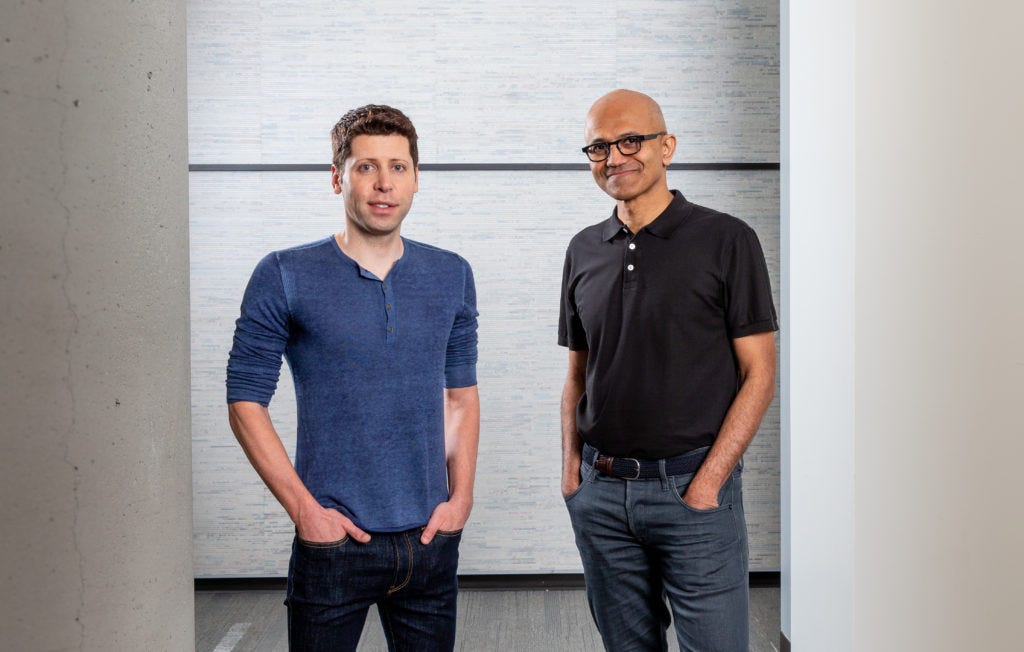
Sam Altman is no stranger to innovation, controversy, or bold visions. Known for his transformative leadership at OpenAI and his deep interest in fusion energy, Altman is once again making waves by orchestrating a strategic web of partnerships with Microsoft and Helion Energy. His approach aligns with key venture capital trends, such as leveraging partnerships to drive market disruption and create scalable, high-growth opportunities.
Altman positions himself and his initiatives as prime targets for investors seeking impactful and forward-thinking ventures. These partnerships promise not only to accelerate innovation in artificial intelligence and fusion energy but also to deliver significant strategic advantages for venture capitalists. By leveraging Microsoft’s Azure cloud capabilities and Helion’s groundbreaking energy technology, these alliances position investors to capitalize on transformative industries poised for substantial growth and market disruption. Together, these alliances aim to reshape the future of both artificial intelligence and energy in ways that will reverberate across industries and geopolitics.
OpenAI’s Momentum
It’s been a tumultuous year for OpenAI. After Altman was briefly ousted from his role in late 2023, the company has seen major shifts in its leadership and direction. This growing momentum coincides with OpenAI’s 12-day rollout of groundbreaking capabilities, including ChatGPT product updates and the release of Sora, OpenAI's video generator pushing the creative boundaries of artificial intelligence.
From the release of ChatGPT in late 2022 to the launch of GPT-4o and o1, OpenAI has introduced significant advancements in language processing, multi-modal capabilities, and contextual understanding. GPT-4o features enhanced reasoning skills, making it invaluable for complex decision-making scenarios, while o1 emphasizes scalability and cost-efficiency. Meanwhile, Sora, represents a breakthrough in AI creativity, enabling seamless and high-quality video content production. This innovation opens up new markets in media, entertainment, and advertising, offering venture capitalists opportunities to invest in the rapidly growing AI-driven content creation industry. For venture capitalists, these developments highlight OpenAI's ability to stay ahead in the rapidly evolving AI market, offering transformative opportunities in sectors like healthcare, finance, and education.
All of this has been made possible through Microsoft's growing Azure business, which has provided the immense cloud computing resources that OpenAI’s models demand.
The Helion Connection
But Altman’s ambitions extend beyond AI. His investment in Helion Energy—a company he’s backed since 2014—reflects a broader vision: creating a future where fusion energy powers the world’s technological infrastructure. Helion is not just another clean energy startup; it’s aiming to crack the code of commercial fusion, which would provide nearly limitless, clean energy.
Sam joined the board in 2016, bringing with him a bold vision shaped by his experience at Y Combinator, where he played a pivotal role in nurturing disruptive startups. Over the last decade, Sam has consistently demonstrated a knack for identifying transformative technologies and aligning them with strategic investments. From his early advocacy for AI at OpenAI to his long-term commitment to fusion energy at Helion, Sam's plan has been clear: leverage breakthrough technologies to address humanity's most pressing challenges. By forging key partnerships, such as the Helion-Microsoft deal, and doubling down on high-risk, high-reward ventures, he has positioned himself as a central figure in shaping the future of both AI and clean energy. His approach reflects a deep understanding of market dynamics and the critical role of innovation in driving economic and societal progress.
Helion has a clear path to net electricity by 2024, and has a long-term goal of delivering electricity for 1 cent per kilowatt-hour.
And if we have much cheaper energy than ever before, we can do things that are difficult to imagine today. The cost of energy is one of the fundamental inputs in the costs of so much else; dramatically cheaper energy will lead to dramatically better quality of life for many people.
Altman’s personal involvement in Helion grew in tandem with his leadership at OpenAI. In 2021, he doubled down on his investment in Helion, just as Microsoft was deepening its ties with OpenAI. Fast-forward to 2023, and the pieces started falling into place: Helion struck a landmark deal to power Microsoft’s data centers with fusion energy, starting in 2028. This would complete a self-reinforcing loop—Helion provides cheap, sustainable energy, which fuels Microsoft’s cloud infrastructure, which in turn powers OpenAI’s computationally demanding AI research.
The Future of Energy and AI
I think a lot about how important cheap, safe, and abundant energy is to our future. A lot of concerns—economic, environmental, war, poverty, food and water availability, bad side effects of globalization, etc.—are deeply related to the energy problem.
I believe that if you could choose one single technological development to help the most people in the world, radically better energy generation is probably it. Throughout history, quality of life has gone up as the cost of energy has gone down.
Altman’s personal involvement in Helion grew in tandem with his leadership at OpenAI. In 2021, he doubled down on his investment in Helion, just as Microsoft was deepening its ties with OpenAI. Fast-forward to 2023, and the pieces started falling into place: Helion struck a landmark deal to power Microsoft’s data centers with fusion energy, starting in 2028. This would complete a self-reinforcing loop—Helion provides cheap, sustainable energy, which fuels Microsoft’s cloud infrastructure, which in turn powers OpenAI’s computationally demanding AI research.
Fusion energy has long been seen as the ultimate solution to the world’s energy challenges, and if Helion succeeds, it could provide the energy required to sustain the future of AI. Unlike other energy sources, fusion energy offers unparalleled scalability, reliability, and minimal environmental impact. AI development, with its intensive computational demands, requires a consistent and affordable energy supply—areas where fusion energy excels. By providing a nearly limitless and clean energy source, fusion could drastically reduce operational costs for data centers and cloud computing, enabling AI technologies to evolve without being constrained by energy limitations. This synergy underscores why fusion energy is uniquely suited to drive the next era of AI innovation.
However, fusion energy projects are inherently high-risk, with significant technical and financial challenges. Venture capital can play a pivotal role in mitigating these risks by providing the long-term capital and strategic guidance needed to navigate regulatory hurdles, scale commercialization, and achieve breakthroughs. For investors willing to take calculated risks, the potential returns from revolutionizing the energy sector and enabling transformative technologies like AI make it a compelling opportunity. Imagine OpenAI’s models, already revolutionizing industries from education to medicine, powered by clean, affordable energy that reduces reliance on fossil fuels.
Geopolitics & Regulation
Geopolitically, the stakes are high. With the U.S., Europe, China, and Russia racing to dominate both AI and energy sectors, Altman’s vision could give the U.S. a major leg up in both arenas. The incoming Trump administration is expected to foster a more competitive environment for AI development and energy innovation. Adding to this shift, Donald Trump has appointed David Sacks as the AI and Crypto Czar. Sacks’ expertise and influence in the tech world could accelerate the integration of AI-driven technologies into the broader economy, creating new opportunities for venture capitalists to invest in sectors poised for exponential growth. Fusion energy could provide energy independence and secure a more sustainable AI infrastructure, positioning America’s technology firms at the forefront of the global stage.
Similarly, technical challenges, such as achieving consistent net energy gain and scaling production, add layers of complexity. For venture capitalists, these risks underline the importance of strategic partnerships and long-term planning to mitigate potential setbacks and capitalize on the transformative potential of both AI and fusion energy innovations. Helion will need to navigate these complexities while building trust with both the public and policymakers. Similarly, OpenAI is facing its own set of challenges. The rapid advancement of its models, particularly in advanced reasoning and multi-modal systems, has raised ethical concerns around AI safety, privacy, and misuse.